ServicesTile Flooring
Tile Flooring in Katy
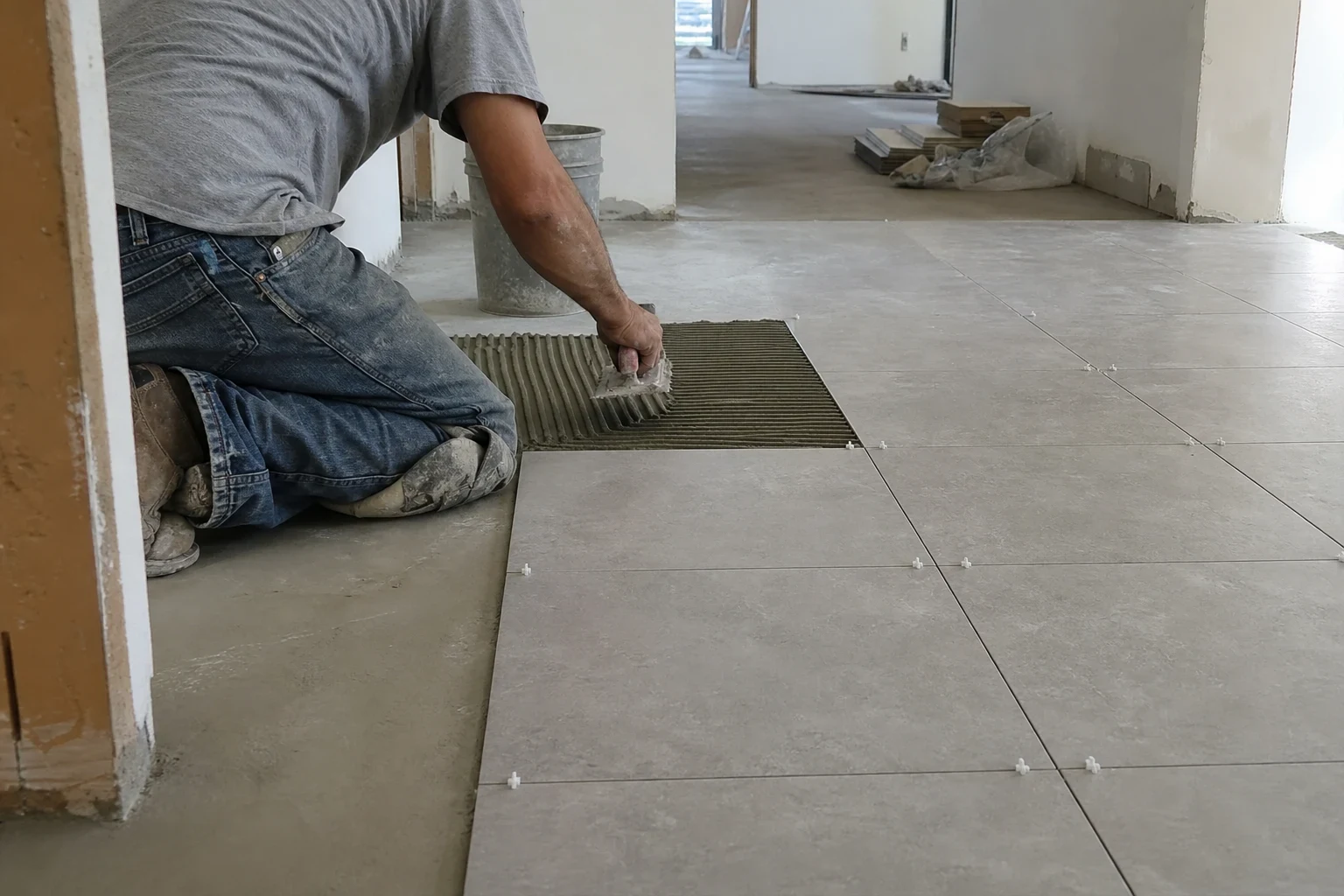
We install porcelain and ceramic tile floors with the slab prep, membrane and cure times each job needs. Before we start, you get a day-by-day plan showing when rooms close, when grout goes in and when you can walk on the floor again.
Tile that holds up starts below the tile
Tile is hard, dense and unforgiving. It does not flex, so it carries every flaw in the surface under it. A high spot in the slab becomes a hollow tile that cracks under a dropped pan. A shrinkage crack in the concrete telegraphs straight through the grout line above it. Most failed tile floors we see were set fine and prepped poorly.
Most homes in the Katy area sit on concrete slabs poured over expansive clay. That clay gains volume after heavy rain and gives it back during dry summers, which means the slab shifts a small amount through the year. We account for it with an uncoupling or crack isolation membrane where the slab calls for one, plus movement joints at the perimeter, so the tile can ride out that shifting without breaking.
Tile is also slower than a floating floor. Thinset needs time to cure before grouting, and grout needs time before heavy traffic. We tell you those waits up front, so nobody is surprised on day three.
What we handle on a tile job
Tearing out the old floor
Carpet, vinyl, laminate or old tile comes up and leaves with us. Chipping out tile that is bonded to concrete throws a lot of noise and dust, so doorways and HVAC returns get sealed with plastic before that work begins.
Slab flatness check and correction
We sweep a long level across the concrete in several directions to map humps and dips. Humps come down with a diamond cup wheel, and dips get patching compound or a pour of self-leveler. Large-format tile needs a flatter surface than small tile, and this step is what keeps edges from sitting uneven.
Crack isolation membrane
Over existing slab cracks or across a whole room, we install a membrane that lets the concrete move slightly without passing that movement into the tile.
Layout before setting
We dry-lay and snap lines so cuts land at walls you notice least and doorways get full or near-full pieces. You see the layout and approve it before thinset is mixed.
Setting, grouting and transitions
Tile is set in the right thinset for its size, back-buttered where needed and checked for coverage by lifting pieces as we go. Then we grout, clean haze, and fit thresholds where tile meets carpet, wood or vinyl.
Signs it is time for new tile
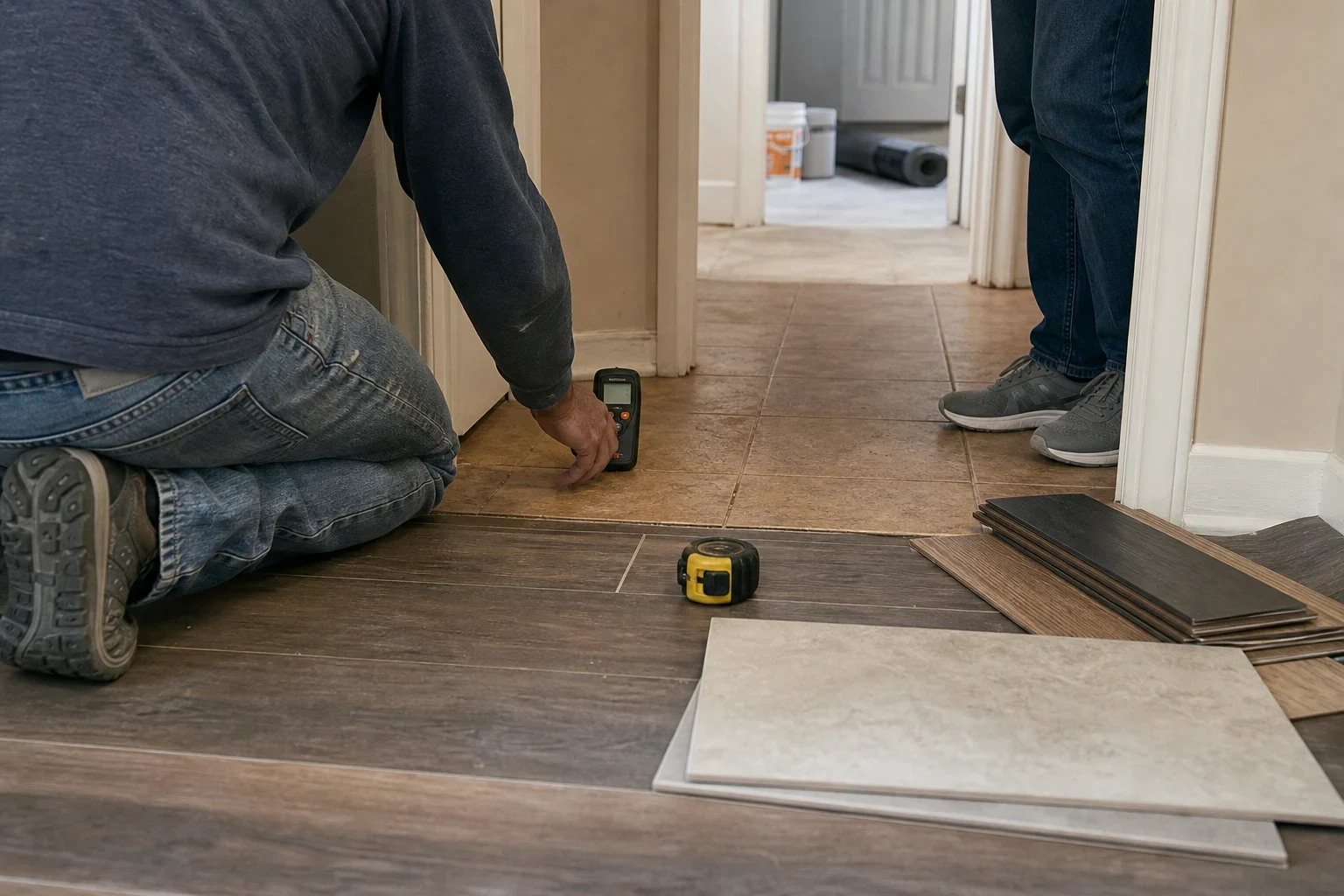
- One crack line through many tiles
- When a single straight crack runs through a row of tiles, it is almost always tracing a crack in the concrete underneath. Swapping out only the broken pieces will not hold unless a membrane goes in below them.
- Tiles that sound empty
- Drag a broom handle or a ring of keys lightly across the floor and listen. Where the sharp click turns flat and drummy, the thinset either never fully bonded or has released, and that tile will eventually crack or work loose.
- Grout crumbling or missing
- Grout that powders out or pulls away from tile edges lets water and dirt get under the floor. When it is widespread, it often points to movement or poor coverage.
- Dated or worn-through glaze
- Older ceramic tile with the glaze worn off in traffic paths stains easily and will not look clean however often you mop it.
- Carpet in rooms that see water
- Carpet in kitchens, laundry rooms and entries holds moisture and odor. Porcelain shrugs off spills and wet shoes.
How your tile job runs, day by day
- 1
In-home measure and look at the slab
We measure each room, check the slab for cracks and flatness, and talk through tile size and pattern. From that, we write out how many days each stage takes in your home.
- 2
Your written schedule and arrival window
You get a start date, a morning arrival window and the order rooms will be done. If a tile shipment is delayed or the slab needs more leveling than expected, we call you that day with the new plan.
- 3
Demo and prep days
Old flooring comes out, the slab is ground, patched and cleaned, and the membrane goes down. Leveling compound may need overnight drying before tile can go over it.
- 4
Setting days
We set tile room by room and leave a clear path so you can still reach the kitchen or a bathroom. Freshly set tile needs to stay untouched until the thinset firms up, usually through the next day, and we mark off those areas before we leave.
- 5
Grout, cleanup and walkthrough
Once the thinset has cured, we grout, wipe haze, install transitions and vacuum up. We walk the floor with you and explain when furniture and appliances can go back.
What moves the price of a tile floor
Tile pricing comes down to the tile you pick and how much work the slab needs before the first piece goes down. We give you a line-item estimate so you can see each part on its own. If prep turns out larger than expected once the old floor is up, we show you what we found before doing extra work.
- Porcelain, ceramic and tile size
- Ceramic cuts and drills more easily, while porcelain's density makes every cut slower and wears blades faster. Big formats and long plank-look pieces take extra care to set flat, often with leveling clips at each joint to keep edges even.
- Slab condition
- A flat, sound slab goes quickly. Grinding, patching, self-leveler and membrane over cracks all add material and time.
- What comes out first
- Removing carpet is fast. Breaking up old tile bonded to concrete takes far longer and produces more debris to haul off.
- Pattern and cuts
- A straight lay keeps most cuts at the room edges. Herringbone, diagonal and staggered layouts put cuts throughout the field and raise the amount of tile ordered as overage, and rooms with many corners, columns or cabinet runs add more cutting time.
Tile flooring questions
- How long will my tile job take?
- An average kitchen and living area often runs several days once you count demo, prep, setting, cure time and grout. The waits for thinset and leveler to cure are real and cannot be rushed without risking the bond. We write the full timeline out room by room before we start.
- Can I stay in my home during the install?
- Yes, most families do. We keep a walking path open and finish rooms in an order that leaves you a working kitchen or bathroom when possible. Demo day is the noisiest and dustiest, so some people plan to be out for that one.
- Will my new tile crack like the old tile did?
- If your old tile cracked along a line, the slab likely moved under it. We use a crack isolation membrane and leave movement joints at walls and in large spans so the floor can take normal slab movement. It is the most common fix for that exact failure.
- Can you lay tile over my existing tile?
- It depends on two things: whether every existing tile is still stuck down tight and sitting level, and whether the extra height clears doors, the dishwasher and transitions to other rooms. In many homes one of those checks fails, and new tile on a loosening layer just carries the failure upward. We sound out the old floor, measure the height changes and tell you plainly which way yours goes.
- Is the installation covered if something goes wrong?
- Yes. Every tile floor we put in carries a 1-year workmanship warranty on all installations, and our company is insured while working in your home. If a tile we set loosens or the grout fails because of how we installed it, we come back and correct it.
- Should I choose tile or luxury vinyl plank?
- Tile is harder, colder and more permanent, and it handles water without any concern. Luxury vinyl plank installs faster, feels warmer and is quieter underfoot. We install both and can lay out the tradeoffs for each room.
Put a tile start date on your calendar
Tell us which rooms you want tiled and when you need them back. We will look at the slab, then give you a schedule you can plan dinners, guests and moving furniture around.